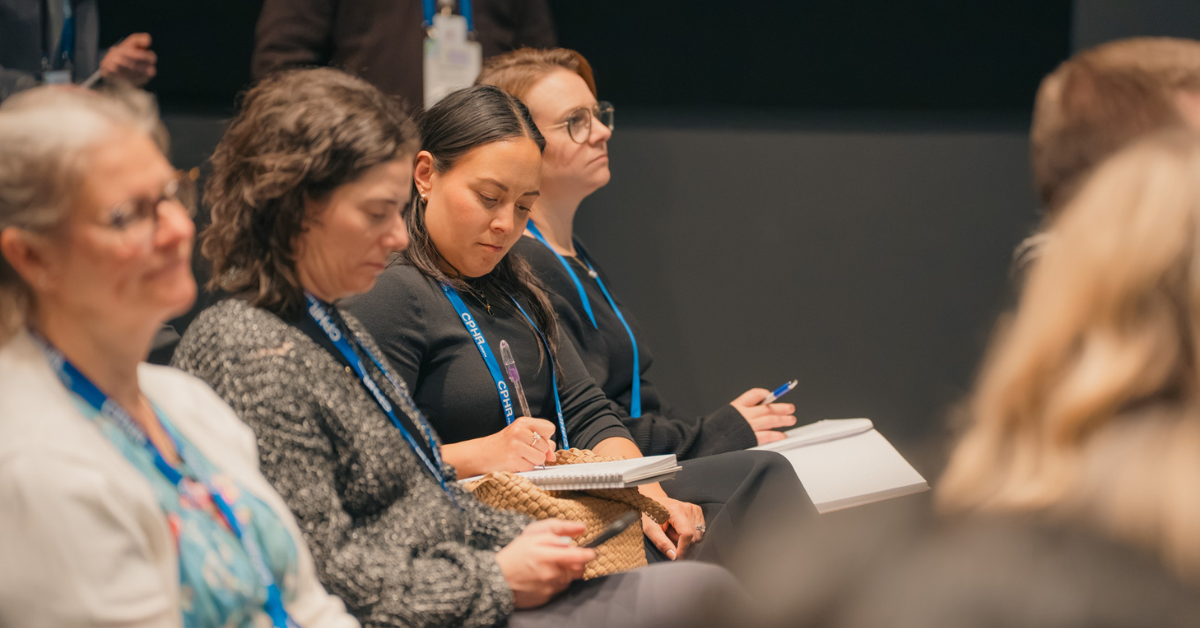
To my dearest Mentor, Amy

Being a protégé of Amy has been one of the most transformative experiences of my professional journey.

From the very first meeting, Amy’s warmth, wisdom, and unwavering support turned my uncertainties into confidence. Coming from an engineering background and stepping into the world of human resources in Canada felt daunting, but Amy’s guidance made this transition possible and truly rewarding.


She witnessed every step of my journey, from seeking my first HR role with hope and uncertainty to the unforgettable moment when I secured a position in the field I now deeply love. Amy’s ability to combine her professionalism with genuine care created a mentorship space where I felt valued, supported, and empowered to ask questions, learn, and grow.


Her encouragement and belief in me were pivotal in shaping my path, and every session with her became a source of inspiration and excitement. Amy, you are more than a mentor—you are a role model, an inspiration, and a key part of my success story.


Thank you, CPHR Alberta, for this incredible mentorship program, which transforms lives and creates opportunities for growth and connection. This program is more than guidance—it’s a symbol of hope and inclusion, empowering us to bring the best of our skills, experiences, and perspectives to build a brighter future in HR.


Author: Rina Alvarado


The CPHR Alberta Mentorship Program is open for applications until January 13, 2025.


The views and opinions expressed in this blog post belong solely to the original author(s) and do not necessarily represent the views and opinions of CPHR Alberta.


The views and opinions expressed in this blog post belong solely to the original author(s) and do not necessarily represent the views and opinions of CPHR Alberta.


By Jessica Jaithoo • September 28, 2026
Author: Volunteers from the Wood Buffalo Chapter Observed annually on October 10th, World Mental Health Day highlights the importance of promoting mental health awareness and improving access to mental health support worldwide. The day was established by the World Federation for Mental Health and is supported internationally by the World Health Organization. In Canada, mental health challenges increasingly affect workplace productivity, employee engagement, and organizational sustainability. For HR professionals in Alberta, World Mental Health Day provides an opportunity not only to raise awareness but also to evaluate policies, workplace culture, and leadership practices that support psychological safety. HR professionals have a significant role in ensuring compliance with provincial legislation while building supportive work environments that address emerging mental health risks. Recent Canadian research indicates that workplace mental health challenges are widespread and growing. Several key statistics illustrate the scope of the issue: 1 in 5 Canadians experiences a mental health problem each year (Employment and Social Development Canada). Mental health problems remain the leading cause of disability in Canada . Approximately 58% of employed Canadians are affected by a mental health diagnosis either personally or through a family member. 52% of employees report mental health challenges that affected their work performance , yet only 33% disclose these challenges to their employer . 39% of Canadian workers report experiencing burnout , demonstrating a significant increase compared with previous years. Nearly 47% of Canadians identify work as the most stressful part of their daily life . The economic implications are also substantial. Mental health problems cost the Canadian economy approximately $51 billion annually, including $20 billion directly related to workplace impacts such as absenteeism and reduced productivity. These statistics demonstrate that workplace mental health is no longer solely an individual concern; it is a strategic organizational issue requiring active engagement from HR and Business leaders. Alberta Legislative Context: HR Responsibilities HR professionals in Alberta must navigate both occupational health and safety requirements and workers’ compensation frameworks related to psychological injuries. The Alberta Occupational Health and Safety Act requires employers to ensure the health and safety of workers, which increasingly includes psychological health and safety. While the legislation traditionally focused on physical hazards, workplace harassment, violence, and psychosocial risks are now recognized as hazards that must be addressed through prevention and policy. Under Alberta OHS requirements, employers must: Identify workplace hazards, including psychological hazards such as harassment or excessive workload Implement prevention measures and policies addressing workplace violence and harassment Provide training and reporting mechanisms for workers In practice, this means HR departments must develop policies addressing psychological safety, respectful workplaces, and harassment prevention. Failure to address these risks may expose organizations to legal liability and regulatory scrutiny. Another legislative body of work comes through the Workers' Compensation Board (WCB) Alberta which recognizes that psychological injuries can occur as workplace injuries similar to physical injuries. It provides income replacement to workers with a diagnosed injury or illness that is shown to arise out of and in the course of employment. For HR professionals, this has several implications: Workplace psychological injuries may result in WCB claims Employers may need to participate in claim investigations and return-to-work planning Organizations must demonstrate that reasonable steps were taken to prevent psychological harm Key Lessons for HR Professionals Integrate Psychological Safety into Workplace Safety Programs Mental health should be treated as part of occupational health and safety rather than a separate wellness initiative. HR professionals should integrate psychological risk assessments into safety management systems and identify workplace factors such as: excessive workloads toxic workplace culture violence, harassment or bullying lack of managerial or organizational support Proactive management of these risks can reduce absenteeism, disability claims, and employee turnover. Train Managers to Respond to Mental Health Concerns Managers often serve as the first point of contact when employees experience psychological distress. However, research shows that many supervisors feel unprepared to address mental health issues effectively. HR professionals should implement training programs that equip leaders to: recognize early signs of burnout or distress conduct supportive workplace conversations connect employees to resources such as Employee Assistance Programs Managerial support is particularly important, as studies show that support from managers and coworkers significantly improves workplace mental health outcomes. Address Workplace Stigma Despite increasing awareness, stigma remains a major barrier to mental health support. A significant proportion of Canadian employees report that they would hesitate to disclose mental health challenges due to fear of career consequences. HR professionals can reduce stigma by: encouraging senior leaders to discuss mental health openly integrating mental health awareness campaigns into workplace culture ensuring confidentiality when employees seek support Strengthen Workplace Supports Effective mental health support systems may include: Employee Assistance Programs (EAPs) flexible work arrangements mental health leave policies access to counselling services Research suggests that time off, flexible schedules, and supportive management are among the most effective workplace mental health supports. For HR professionals in Alberta, World Mental Health Day serves as an important reminder that mental health is both a legal responsibility and a strategic workforce issue. Organizations that prioritize psychological safety and employee wellbeing are better positioned to reduce disability claims, improve employee engagement, and retain skilled workers in a shrinking talent pool. With rising burnout levels, increasing psychological injury claims, and evolving legislative expectations, HR professionals in Alberta must take a leadership role in promoting mental health and wellbeing in the workplace. By aligning organizational practices with occupational health and safety requirements, supporting employees experiencing psychological challenges, and fostering open workplace cultures, HR professionals can help create healthier and more sustainable workplaces for the future.

By Jessica Jaithoo • September 10, 2026
Author: Eleanor Hecks As workforce analytics becomes more sophisticated, organizations have more ways to understand how work gets done. But introducing these tools without clear communication can create uncertainty around privacy, data use and employee trust. HR leaders should make the purpose and boundaries of these tools clear from the start. The Rise of Employee Monitoring The workforce analytics market has reached $2.92 billion in 2026 as organizations pursue hybrid-work optimization, data-driven talent decisions and AI-powered analytics. Within this broader market, organizations are increasingly using tools such as productivity-monitoring software, keystroke logging, application and activity tracking and other systems that analyze employees' work patterns. These technologies can give HR greater visibility into workloads, staffing needs, productivity and broader workforce trends. However, as these tools become more sophisticated, HR also needs to consider how employees will understand and respond to data collection. What Can Go Wrong When Employers Introduce Productivity Trackers? Problems can arise when employees do not know what information the organization collects or how it will use it. Workers may worry that screenshots or time away from a device could become measures of their value or performance. These concerns are worth taking seriously. The American Psychological Association found that 45% of workers who experienced workplace monitoring said their work environment had a negative impact on their mental health. The finding highlights why HR should consider the employee experience when introducing these tools. Building Trust in Workforce Analytics Introducing monitoring works best when employees understand the decision and see themselves as part of the process. Transparency and early communication often build confidence and trust. Address Employee Concerns Before They Become Questions HR should explain the basics before introducing the software, including which activities the system will track and which it will ignore. Managers should also let teams know whether the tracker data can influence performance decisions. Proactively explaining the tool's capabilities and limitations can help prevent an unexpected discovery from becoming a trust issue. Have a Clear Purpose for the Technology HR should identify the specific problem before choosing a solution. This becomes especially important as organizations race to adopt emerging technologies without defining clear objectives first. This pattern is visible in how many companies are currently approaching AI adoption. A survey found that about half of organizations have deployed AI or plan to do so this year, but only one-third have a strategy for it. These numbers show that organizations are implementing tools simply because they feel like they “should,” faster than they can define what success looks like. Workforce analytics tools — many of which now include these AI-powered features — present the same challenge. “We need to use more tools that integrate AI” or “Everyone else is tracking productivity” are not strategies. Without a clear purpose, HR may collect more data than it needs or track metrics that don't align with actual business decisions. Before selecting a monitoring tool, HR should determine what it needs to learn and what decisions the data will support. Explain the Difference Between Aggregate and Individual Data Employees should understand whether HR is looking for broader workforce patterns or evaluating individual behavior. Aggregate data might show that a department is consistently handling a heavy workload, while individual data could reveal how a specific employee spends their time. Making this distinction clear can reduce uncertainty about how the organization will use employee information. Build Trust Through Inclusive Practices Employee involvement should begin before committing to a vendor or a tool. Representatives can help assess what a system collects and whether intrusive features align with organizational goals. HR can invite employees to ask questions and solicit their feedback on monitoring policies. California's proposed AB 1883 illustrates the emerging regulatory conversation around workplace monitoring. The bill seeks to prohibit employers from using workplace surveillance tools that predict emotional states or collect neural data. As proposed legislation, it is not currently a requirement for California employers, but it demonstrates how policymakers are beginning to address newer forms of workplace surveillance. Trust Starts Before the Monitoring Does Workforce analytics can deliver real insight into workforce needs. Organizations that communicate openly about purpose and involve employees often create monitoring systems that support better resource allocation and planning.
By Jessica Jaithoo • August 21, 2026
Each year on August 26th, Women’s Equality Day offers an opportunity to reflect on progress toward gender equity while recognizing the work that remains. While legislative milestones have helped create a more equitable foundation, the lived experiences of women in today’s workplaces tell a more nuanced story. To explore this further, we invited a group of women leaders to share their perspectives on equality in practice, the barriers that persist, and the actions needed to drive meaningful change. Their responses highlight both the progress made and the opportunities ahead. Contributors: Chelsea Harper, Director of Human Resources, Stoppler Hughes Christine Dagenais, Founder and CEO, Bright Wire Leadership Development Connie De Ciancio, Chief Commercial Officer, Strathcona Resources Michelle Dulmadge, Executive Vice President Human Resources, Surerus Murphy Rosy Makkar-Sethi, Portfolio Head of HR, Volaris Group Sabrina Brock, Vice President Human Resources, TriSummit Utilities Inc. To guide the discussion, we asked each contributor to reflect on three questions: What does women’s equality truly mean to you in today’s professional or leadership context, beyond formal policies or stated commitments? From your experience, what structural or cultural barrier continues to limit women’s advancement, and where do you see the greatest opportunity for progress? What is one action by leaders or organizations that can meaningfully advance women’s equality, and why does it matter now? Across responses, women’s equality was described not just as a policy outcome, but as a lived experience of fairness, recognition, and opportunity. As Chelsea shared: “It requires acknowledging that women have historically been conditioned differently in the workplace and society. The goal is to build workplaces where women are valued, compensated, and developed equitably enough that gender eventually becomes irrelevant to the conversation.” Connie emphasized fairness in assessment: “It is when people are genuinely assessed on their capability, judgment, performance, and leadership potential, not on assumptions or labels. It is not about lowering the bar or advancing someone because of gender; it is about making sure the best person has a fair opportunity to step forward and be recognized.” Sabrina reflected: “It is the experience of truly feeling valued for who you are as a professional and as a leader, where gender is not a topic of conversation. It also means being surrounded by more women in senior leadership roles due to equal access to stretch roles, equivalent tolerance for risk-taking, and performance judged by the same standards.” Despite progress for women in the workplace, certain barriers remain and are often invisible to those who have not experienced it. Chelsea reinforces the deeper context behind these challenges: “A true commitment to women’s equality requires acknowledging that history and understanding how deeply it still impacts confidence, negotiation, leadership presence, and career progression today.” Rosy names it directly: “A persistent barrier I continue to see is the reliance on subjective notions of leadership potential, often shaped by familiarity and unconscious bias. In my experience, this disproportionately impacts women, and even more so women of colour, whose strengths and leadership styles may not align with the traditional model. I have seen how this can limit access to opportunity despite clear capability and performance.” Subjectivity, when left unchecked, defaults to familiarity. Familiarity tends to favour the dominant group even when it is not intentional. This habit will continue to be consequential in the workplace. Sabrina offers a common example of how this bias shows up in practice: “If the behaviour is assertiveness, men may be seen as strong, confident, decisive leaders; however, when a woman behaves that way, they may be seen as aggressive, difficult, or abrasive.” The good news: Michelle calls for organizational accountability. “When equity is treated as a business discipline, not just a values statement, it becomes measurable and sustainable.” Christine adds the human dimension: “Real progress happens when women stop waiting for permission and start taking their seat at the table and when men in leadership actively sponsor and advocate for women, not simply as a diversity initiative, but because it strengthens teams and organizations.” Together, they point to the same truth: meaningful advancement requires both systemic intention and individual confidence. These examples are not seeking for exception, but consistency. Women want to be seen clearly, assessed fairly, and given the same opportunities to rise, or stumble, that their peers receive without having to ask. Building on this, one theme emerged clearly in how contributors see progress taking shape: the importance of sponsorship. Respondents highlighted the impact of leaders actively advocating for capable colleagues - particularly those who may not yet recognize their own potential or have had opportunities to demonstrate it. Rosy emphasizes the role of leadership influence, noting that “When leaders use their influence to advocate for women in succession discussions, critical assignments, and promotion decisions, opportunities for women increase significantly”. Similarly, Michelle reflects on the tangible impact of sponsorship in practice: “In my career, the moments that accelerated growth were when a leader put my name forward for something I had not yet been given the chance to prove at scale. Those decisions build confidence, capability, and visibility in ways that formal development programs cannot”. The urgency of this approach is reinforced by Connie, who notes, “This matters now because organizations need the strongest possible leaders, and they cannot afford to overlook capable people who may simply need a push to step up.” Christine expands on this broader organizational impact, stating “The leaders who understand this do not see equality as a favour or a quota. They recognize, as research continues to show, that advancing women’s equality is a strategic advantage. And importantly, they understand that creating greater equality is not a zero-sum game. When women rise, organizations, teams, and communities benefit alongside them.” Collectively, these perspectives highlight key actions: sponsorship, creating meaningful opportunities for growth, and encouraging individuals to recognize and step into their potential. Advancing women’s equality requires intention, advocacy, and action - turning insight into impact by championing talent and ensuring no potential goes overlooked.
MORE NEWS