


Building Trust with Indigenous Employees: The Role of HR and Leadership

Trust is the foundation of any successful workplace, and for Indigenous employees, it is defined by historical, social, and political realities that organizations must acknowledge and understand. Building trust with Indigenous employees goes beyond basic diversity policies to a more informed and meaningful action plan towards achieving a respectful, equitable workplace and a commitment to reconciliation. 

According to Alberta Learning Information Service (ALIS), a commitment to building a trusting relationship between employers and Indigenous employees is not only an ethical responsibility but also creates a strategic business advantage. Human Resources and leadership play a crucial role in building this trust by intentionally integrating inclusion, trust, and accountability into all aspects of the workplace.


Understanding Trust in the Indigenous Workplace Context


Trust for Indigenous employees is influenced by a history of colonization, systemic discrimination, and inequities that affect employment experiences today. Data from Statistics Canada (2022) reveals that Indigenous people are more likely to experience workplace discrimination than non-Indigenous employees (15.2% versus 9.1%), and they are also less likely to remain in roles long-term, with only 32.0% reporting tenures of 10 years or more compared to 37.3% of non-Indigenous workers.


Statistics like these reveal the lower levels of psychological safety that Indigenous employees feel at work. Building psychological safety for this marginalized group therefore requires HR and leadership to move from performative inclusion to more meaningful and relationship-based practices that are centered around trust, respect, and inclusion.


The Role of HR and leadership in Building Trust


Building trust with Indigenous employees is a shared responsibility that requires both HR and leaders to work in sync.  We will discuss the roles of both parties below.


1. Mentorship 

Indigenous employees who are new to the workforce might be unfamiliar with systems, procedures, and expectations. A mentorship program, opportunities for leadership development or training, or a buddy system that pairs them with an employee guide and supports them throughout their first few months or longer can be beneficial for these workers.


An effective mentorship program will require organizational leadership to endorse and prioritize mentorship initiatives while HR works with managers to design and implement mentorship programs that will meet each employee’s development needs. When done right, Indigenous mentorship programs can bridge the cultural gaps and create safe spaces for growth and promote psychological safety.
 

2. Cultural Competency and Awareness Training 

Cultural competency has become a critical skill in managing today’s diverse workforce and the major aim of this training is to create awareness and/or improve the understanding of various cultures and beliefs in the workplace while equipping staff with skills required to seamlessly communicate, collaborate, and respectfully work with people from different backgrounds.


Leaders must champion this training and promote a culturally respectful workplace culture. HR must lead the implementation of such training, ensuring it is structured, inclusive, and embedded across the organization and engage the right facilitators.
 

3. Providing Support for Emotional and Mental Well-being 

Supporting Indigenous employee well-being is another critical responsibility. To achieve this, organizational leaders must commit to fostering a culturally safe, trauma-informed workplace that respects Indigenous traditions, prohibits discrimination, and creates environments where Indigenous employees feel safe to speak up.  Clear reporting avenues and prompt action to concerns should be addressed.


HR’s part in this initiative is to provide Indigenous based employee assistance programs like Indigenous-specific counselling resources, elder support, and land-based healing programs where accessible. Also, promoting a supportive workplace culture, fostering inclusive team environments where Indigenous employees feel supported and valued. 

4. Integrating Cultural Inclusion in Workplace Practices 

This is another shared responsibility between HR and leadership. HR plays a key role in designing and formalizing cultural inclusion practices such as starting corporate events with land acknowledgments, creating space for cultural practices like smudging, supporting flexible holidays for cultural celebrations, and ensuring that Indigenous memorial events such as the National Day for Truth and Reconciliation or Aboriginal Awareness Day are celebrated.
 

The leadership role is to reinforce these commitments to cultural inclusion by openly supporting and participating in these initiatives, which shows that the organization regards cultural inclusion as a priority. 


5.Supporting Career Advancement and Fair Performance Practices
 

Finally, HR plays a vital role in designing clear, transparent paths for advancement and working with managers to implement fair and consistent application of performance standards and employee feedback systems.


Organizational leaders are responsible for supporting employee growth and development, encouraging participation in career advancement pathways, and demonstrating commitment to equity and inclusion.


The following experience report offers a real-world example of how the trust-building principles outlined above can be put into practice through partnership, flexibility, and shared accountability. 


Experience Report: Building Trust Through an Indigenous Employment Partnership by Rike Enss 


In 2024, my HR team attended a career fair at Norquest College where they were approached by leaders of the Indigenous Career Centre, an external facing program of the college located right next to Norquest. The Indigenous Career Centre (ICC) connects Indigenous talents with their employer partners. So, the conversation was two-fold, finding an employer partner that could support employment opportunities. As a company who has Indigenous Partnerships as a strategic pillar and actively connects with Indigenous communities to support each other, we were very open to connecting and hearing how we can engage.


From there, many conversations and meetings were held, where we got to know each other and actively connected on what this partnership could look like, as we are mostly a seasonal employer. Most of our jobs are entry level and all one needs are 3 safety tickets. Even that could be quite a challenge for some Indigenous job seekers. But the Indigenous Career Centre was there to help, and able to financially support job seekers with getting these tickets through funding or other means.


Before the whole partnership could begin, a formal Pipe Ceremony was held in February of 2025, where leaders from both sides came together to ground our relationship and affirm our intention to walk together side by side, helping each other and our job seekers.  As a company, we also knew we needed to be a bit more flexible than our usual approach, and that wasn’t hard to achieve. Partnering with ICC and consistent and open feedback and communication made this possible.


In the spring of 2025, my HR team was actively recruiting from ICC. We started with 6 people entering into our weeklong training that is required to work as a safety watch. Of the 6, we had 1 person remaining who started working with us, but what a shining star! Even though we weren’t successful in having the other 5 start work, we have had great experiences and gained some valuable learnings.


When we started our recruitment approach in the fall, we changed our process to allow for more time to obtain tickets, provide additional support during the process, and make sure expectations were clear and set. As a result, ICC was also able to source better candidates who would be a good fit for the oil and gas industry and potentially available to be away from home. Over time, the 2 partners understood each other's needs better, and both continue to learn the other’s needs. In the fall, we ended up hiring 6 people from the ICC.  This spring 2026, we successfully trained 7 people from the Indigenous Career Centre.


Being able to learn from each other and grow together is a very rewarding experience as an employer.


Conclusion 

Creating a culturally safe and supportive workplace is essential to fostering belonging and well-being for indigenous employees. When leaders and HR create a culture that listens, learns, and acts with respect, trust is achieved. An inclusive environment not only supports Indigenous employees to thrive but also improves engagement, retention, and overall workplace relationships.
 

Trust is built through accountability, and it is important that organizations align workplace practices with Truth and Reconciliation Commission of Canada’s Calls to Action and the United Nations Declaration on the Rights of Indigenous Peoples strengthens Indigenous inclusion efforts. Organizations should track metrics like retention, engagement, and psychological safety, while incorporating Indigenous voices through lived experiences. Organization should also publish their Indigenous inclusion commitments, report on their progress, and be honest when they fall short. 


Finally, acknowledging the long-term organizational risks of failing to build trust -such as reputational harm, reduced engagement, and limited talent attraction - would emphasize the strategic importance of sustained and accountable action. 


By Oluwayemisi Peters and the CPHR Alberta Edmonton Chapter Committee


The views and opinions expressed in this blog post belong solely to the original author(s) and do not necessarily represent the views and opinions of CPHR Alberta.


By Marina Perkovic July 22, 2026
At the CPHR Alberta Conference, we asked HR leaders one question: What leadership capability matters most for the future of your organization? Leaders picked up a star and placed it beside their answer. By the end of the conference, HR leaders cast 131 votes across 16 capabilities. Three stood out, with two tied for first place. Here is what they told us. What the Data Showed The capabilities on the board came from Bright Wire's PLUS Leadership Framework, a proprietary model built to define what effective leadership looks like across every level of an organization and is organized across four dimensions: Courageous Coach-Like Disciplined for Results and Relational The results below reflect the capabilities HR professionals believe matter most. 
By Jessica Jaithoo July 9, 2026
Author: Robin Daultani Mental health support. Fitness benefits. Stress management resources. Workplace wellness programs have evolved significantly over the past decade. Yet one foundational pillar of employee health and performance remains conspicuously absent from most wellness strategies: sleep. The cost of this gap is staggering. A landmark RAND Corporation study¹ found that insufficient sleep costs the Canadian economy up to $21.4 billion annually, through a combination of absenteeism and reduced productivity. A Gallup study² reinforced this finding, showing that poor sleepers report more than double the rate of unplanned absences compared to other workers. And a 2026 Wellhub study³ found that 83% of employees identify poor sleep as a contributing factor to burnout, a figure that demands attention when nearly nine in ten employees report burnout symptoms annually. Consider what this looks like in practice. A team member who slept poorly scrolls through emails at 7am already feeling behind. By mid-morning, a decision that should take minutes stretches into a 45-minute deliberation. After lunch, focus drops sharply, not because of the workload, but because the brain is running on insufficient rest. By 3pm, a second coffee masks the fatigue but does nothing for the impaired judgment underneath. Research shows that after 17 hours of continuous wakefulness, the equivalent of a normal waking day ending at 11pm, cognitive impairment matches that of someone who is legally intoxicated⁴. This is not an unusual day. For many employees, this is every day. Sleep rarely appears on the wellness agenda, leaving a significant and measurable performance gap unaddressed. The reason is partly cultural. Sleep is still widely perceived as a personal responsibility. But the research suggests otherwise: sleep is not a personal indulgence. It is a performance lever that affects every metric HR professionals are already tracking: productivity, absenteeism, burnout, and retention. The same RAND study¹ that quantified the cost of insufficient sleep also found the flipside: if Canadians who sleep under six hours started sleeping just one hour more per night, it could add $12 billion to the national economy. The returns are not theoretical. They are measurable, achievable, and waiting to be captured. The good news is that addressing sleep does not require a major overhaul of existing wellness programs. Organizations can start by simply putting sleep on the wellness agenda. Most workplace wellness surveys ask about stress, mental health, and physical activity. Adding questions about sleep quality or duration to existing wellness assessments can provide baseline data to identify and measure the scope of the issue within their workforce. Leaders and managers who openly prioritize rest and recovery give permission for the rest of the organization to do the same. Small cultural shifts like discouraging late-night emails or respecting boundaries around after-hours communication can quietly improve sleep conditions across an entire team. None of these require a budget. They require intentional inclusion. Now consider what becomes possible. A team member, after two weeks of consistent, quality sleep, arrives at work already focused. The mid-morning decision is made in minutes. The afternoon dip is manageable, not debilitating. The second coffee becomes optional, not essential. Nothing else about their workload or responsibilities has changed. They show up more empathetic and more present for their customers, peers, and family. The only difference is how well they slept. The performance gap between these two versions of the same employee is not marginal. It is the difference between surviving and thriving. The question for HR professionals is no longer whether sleep affects organizational performance. The research has answered that definitively. The question is whether sleep has earned a place in their wellness strategy. And if not, what that gap is quietly costing their organization.
By Jessica Jaithoo June 25, 2026
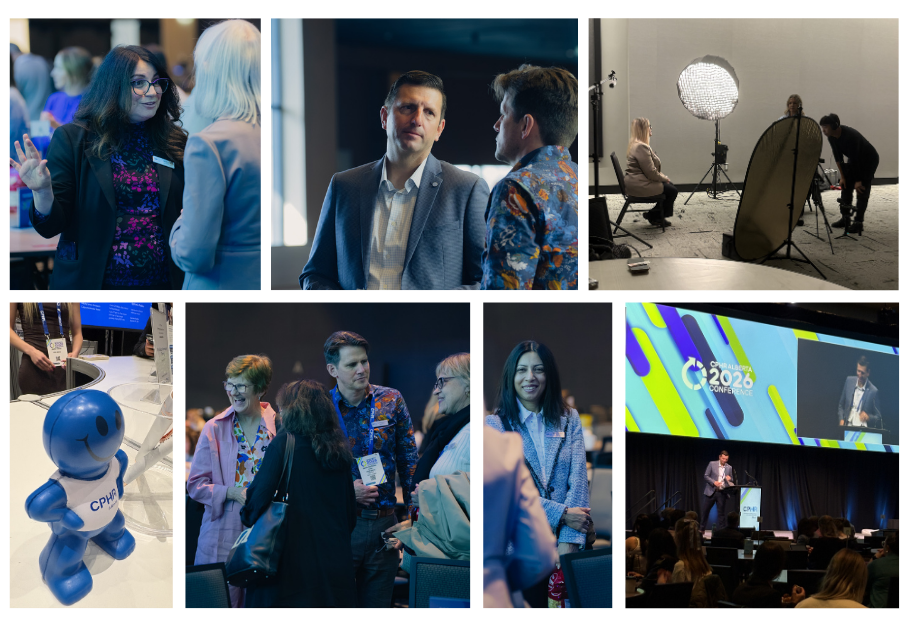
Author: Rheya Patel , 2026 Social Media Committee Member Leading with Courage, Empathy, and Connection Over the past two days, people leaders and business professionals as well as members of our CPHR Alberta community gathered at the BMO Center in Calgary to explore the ever-evolving terrain of Human Resources, firmly reminding me just how incredibly interesting, as well as important our work is in daily organizational operations. Coming from an in-person perspective, the energy was incredible. As Co-Chair of this year’s Social Media Committee, I had the privilege of attending both days, capturing these moments and learning alongside all of you. The overarching theme of this year's conference was clear: while technology and processes are evolving, the future of HR is fundamentally asking us to be more human. Day 1: Adaptability and Breaking New Paths We kicked off Day 1 with a focus on Change Management. The first panel emphasized that in a world defined by constant shifts, HR must prioritize workforce planning and clear communication to remain resilient. One of the most unique panels on day 1 explored the world of Military Reservists led by three actively serving reservists. It was intriguing to learn about skills that can be transferred both "on and off the field"—such as leadership under pressure and community networking—and how undoubtedly invaluable they are to the professional world. Our panelists also touched on the vital importance of motivating and connecting with Canadian youth to build our future talent pipelines. Our closing panel was a powerful discussion on Leading the Future. The message was bold: do not wait for a path to be cleared for you. Courage is the Catalyst: Small ideas can spark massive change. Validation through Action: When you take the lead, others join the idea, creating the momentum needed to become a changemaker. A New Approach to Leadership: Instead of leading solely with data, processes, or solutions, the panel challenged us to lead with stories, questions, and silence. However, this was not the end. After all scheduled events, the day wrapped up with an HR Social in our exhibit hall. And though my duties were finished for the day, I took full advantage of the opportunity to meet with other HR professionals to continue to learn and grow. Receiving invaluable tips on starting off my own career as an emerging HR professional. Day 2: Culture, Integrity, and the AI Balance Day 2 shifted our focus toward the internal health of our organizations. I firmly believe that organizations should take care of the people within, just as they care about the people on the outside. We can think of it as how we take care of ourselves and each other. Empathy causes us to care deeply for others, but sometimes caring for ourselves can lose priority in our day to day lives, but our bodies are tuned in to making sure we don’t forget. Such as internal signals to let us know when we’re tired, our stomachs rumbling to indicate hunger. These internal signals can be a mini, personal version of an HR group, taking care of the internal needs while we take care of external needs. Starting bright and early, our opening keynote speaker addressed the difficult reality and complexities of toxic bosses. As HR professionals, it is our responsibility to ensure toxicity isn't "hidden in plain sight," to hold these bosses accountable, and to protect employees from potential retaliation when reporting harmful behavior. It is part of our role to reach the root of the issue and help to resolve it before the weeds grow out of control. Our first micro-session of the day dove into a matter that has become a topic of intense discussion as of recently. Our Aging Workforce. The speaker brought up insightful thoughts on mitigating the impacts, redesigning work environments to support employees at every life stage. By debunking the myth that older workers are "more expensive" and encouraging mentorship between generations, we create a more inclusive culture. The Role of Trust and Culture The second microsession of the day served as a great reminder to all those who attended the conference, that culture and trust are formed much earlier than we often assume. From the transparency of the hiring process to the clarity of defined roles, the employee experience begins the moment trust is established. And this can serve as a defining factor in a candidate’s decision when applying for roles as well as accepting offers. The "Ghost of AI" vs. Human Connection I had the pleasure of attending one of the three offered breakout sessions for day 2, and it touched on an increasingly more relevant concern emerging in the HR world and in the workforce in general. Artificial Intelligence. While AI is a powerful tool for managing vast amounts of data and streamlining applications, we must be wary of its "ghosts." The AI Limit: While AI can assist in conflict analysis, it is largely useless in resolving conflict if there is no genuine human connection. Three Smarts: To navigate conflict, we need a balance of book smarts, street smarts, and—most importantly—emotional smarts. Connection is the Cure: As we use AI more, we risk connecting with each other less. Conflict resolution requires building real bridges, not just analyzing data. With AI becoming much more prevalent in today’s workforce, being more reliable in terms of productivity and efficiency, it is missing the lifeblood of any organization. Being human. While AI has many uses and can easily adapt on the flick of a dime, it is us, the culture, being human, that makes a workplace come to life. Closing with Empathy To close out this years’ CPHR conference, our final keynote on transformative leadership was led by the Honourable, Beverley McLachlin, the first female and longest-serving Chief Justice. While short, it had to be the most powerful session I got to attend over the two day conference. The lesson was simple, yet profound: Leading with integrity and empathy means finding the best in your people and highlighting their unique strengths to succeed as a unified team. And I believe this is what HR is about. Working with people that bring out the best in each other to form strength and unity in the workforce. Looking Ahead to 2027 I hope everyone learned something invaluable that changes the way they work. That we all remember, in the end, the future isn't just about efficiency; it's about courage, flexibility, and a deep commitment to the people we serve. It was a privilege to be part of capturing insights from the Conference with the Social Media Committee. You’ll soon have the opportunity to revisit select sessions when our On Demand offering launches. Stay tuned this fall for ticket sales for the CPHR Alberta 2027 Conference, happening in Edmonton on June 9th and 10th. We can’t wait to welcome you back!
MORE NEWS