

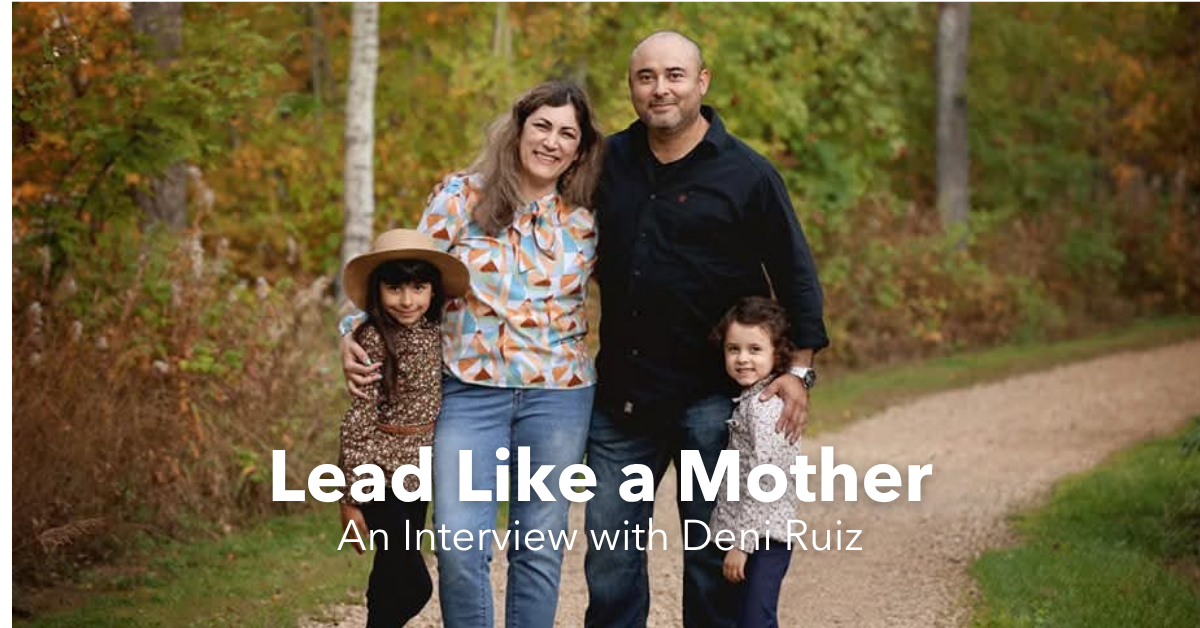
Beyond the Boardroom: Why Motherhood is Your Greatest Leadership Asset

Author: Nidhi Gandhi, 2026 Social Media Committee Volunteer


Motherhood is often described as the world’s most demanding job, yet it rarely comes with a job description, a performance review, or a manual. It is a profound and often relentless act of stewardship that asks us to be an anchor, a strategist, and a source of support, sometimes all at once. For modern HR executives, this reality carries added complexity. Our professional lives are spent navigating organizational health, talent development, and culture. We shape workplace policies, advocate for employee well‑being, and bring the people perspective to the leadership table. 


When we step into the dual role of executive and mother, we aren’t simply balancing two lives; we are bringing together two complementary skill sets. As Deni Ruiz, Executive Director of People and Culture at Keyano College, explains:
“In my role, I balance strategy with humanity, supporting leaders and employees, navigating change and complexity, and making tough decisions when needed. I am supported by an amazing team of professionals who care deeply for our colleagues, the College, and the community.” 


Being both an executive and a mother means showing up focused in the boardroom while also being a safe harbor at home. It requires constant recalibration and a willingness to redefine what success looks like at different stages of life. It also reinforces an important truth: empathy is not just a personal quality, it is a leadership asset.


When we asked Deni how she transitions from mom mode to executive mode, she shared:
“It’s less of a flip of a switch and more of a recalibration. I go from solving activities, snack logistics, and figuring out the root cause of meltdowns, to solving organizational challenges and understanding what motivates and engages people in the workplace. But at the core, both roles are about supporting people and making good, informed decisions, just at different complexity levels. A deep breath, a chai latte, and I’m in an executive mode.

What I find a bit more challenging is transitioning back to ‘mom mode’ at the end of a long, busy day.” 


In this conversation, we look beyond titles to discuss the realities of nurturing a high‑level career while raising the next generation. Whether you are climbing the ladder, building a team, or navigating your own career path, this dialogue offers both reflection and reassurance that your path can evolve, and that is okay.


How has motherhood shaped your approach to HR policies? Does it change how you view things like flexible work, benefits, or performance management? 


Motherhood has deepened my understanding of how policies land in real life. It’s made me more attuned to what employees are balancing outside of work, including growing demands related to child care, elder care, and mental health. That perspective has strengthened my support for flexible and inclusive workplaces, not as perks, but as tools for retention, productivity, and respect. Being a mom hasn’t lowered performance expectations; it has clarified how we enable people to meet them by recognizing the realities that shape today’s workforce and equipping leaders to respond thoughtfully. 


What is the most rewarding “full circle” moment you’ve had where your professional role and motherhood intersected? 


There are moments when I’m coaching my kids on family values, goal setting, or how to navigate conflict with their sibling, and other moments when I’m coaching leaders through difficult workplace conversations or career development decisions. I’ve realized I draw on the same patience, clarity, and empathy in both settings. Seeing those conversations handled well, and knowing they positively affect someone’s experience at work, feels like a true intersection of both roles. Just as each child is different, even within the same family, employees experience work differently. Understanding those realities helps build alignment and trust. 


What advice would you give to a midcareer HR professional who is hesitant to pursue an executive role because they fear it will compromise their family life? 


It’s a valid concern. Executive roles come with more responsibility and mental load, but they also offer greater autonomy to shape how and when you work. The key is being intentional. Be clear on your non‑negotiables, choose organizations whose values align with yours, and remember that strong leadership includes modeling sustainable ways of working, not constant availability. 


If you could give a Mother’s Day gift to working moms, aside from a day off, what would it be? 


I’d give them the freedom to be genuine and true flexibility, the kind that is trusted, consistent, and free from career trade‑offs. When people don’t have to choose between being present at home and being seen as committed at work, that’s where working moms can truly thrive. The idea of perfect work‑life balance is overrated. Priorities shift over time, and only you and your family know what the right combination looks like in any given season. 


Deni’s journey reminds us that senior leadership and motherhood are not competing forces to be managed, but complementary roles that strengthen one another. The empathy cultivated at home makes us better leaders, just as strategic thinking at work helps us build stronger foundations for our families. 


As we celebrate Mother’s Day, let this conversation prompt reflection. You do not have to choose between being a successful professional and a present, nurturing parent. You can be both, and you can lead through both. 


ABOUT THE AUTHOR


Nidhi Gandhi, CPHR, is a Human Resources Professional and Front Store Supervisor with over seven years of experience supporting organizational effectiveness across North American markets. She holds a Master of Commerce in HR and Marketing and a Bachelor’s degree in Accounting and Finance, bringing a balanced perspective to people strategy and business outcomes. Currently pursuing her CPHR designation, Nidhi specializes in recruitment, performance management, and process improvement, with a strong interest in the future of work and the practical application of Generative AI. She is also a proud volunteer member of the CPHR Alberta Social Media Committee, where she enjoys contributing to meaningful conversations that build connection, culture, and community within the HR profession. 


The views and opinions expressed in this blog post belong solely to the original author(s) and do not necessarily represent the views and opinions of CPHR Alberta.


By Jessica Jaithoo August 21, 2026
Each year on August 26th, Women’s Equality Day offers an opportunity to reflect on progress toward gender equity while recognizing the work that remains. While legislative milestones have helped create a more equitable foundation, the lived experiences of women in today’s workplaces tell a more nuanced story. To explore this further, we invited a group of women leaders to share their perspectives on equality in practice, the barriers that persist, and the actions needed to drive meaningful change. Their responses highlight both the progress made and the opportunities ahead. Contributors: Chelsea Harper, Director of Human Resources, Stoppler Hughes Christine Dagenais, Founder and CEO, Bright Wire Leadership Development Connie De Ciancio, Chief Commercial Officer, Strathcona Resources Michelle Dulmadge, Executive Vice President Human Resources, Surerus Murphy Rosy Makkar-Sethi, Portfolio Head of HR, Volaris Group Sabrina Brock, Vice President Human Resources, TriSummit Utilities Inc. To guide the discussion, we asked each contributor to reflect on three questions: What does women’s equality truly mean to you in today’s professional or leadership context, beyond formal policies or stated commitments? From your experience, what structural or cultural barrier continues to limit women’s advancement, and where do you see the greatest opportunity for progress? What is one action by leaders or organizations that can meaningfully advance women’s equality, and why does it matter now? Across responses, women’s equality was described not just as a policy outcome, but as a lived experience of fairness, recognition, and opportunity. As Chelsea shared: “It requires acknowledging that women have historically been conditioned differently in the workplace and society. The goal is to build workplaces where women are valued, compensated, and developed equitably enough that gender eventually becomes irrelevant to the conversation.” Connie emphasized fairness in assessment: “It is when people are genuinely assessed on their capability, judgment, performance, and leadership potential, not on assumptions or labels. It is not about lowering the bar or advancing someone because of gender; it is about making sure the best person has a fair opportunity to step forward and be recognized.” Sabrina reflected: “It is the experience of truly feeling valued for who you are as a professional and as a leader, where gender is not a topic of conversation. It also means being surrounded by more women in senior leadership roles due to equal access to stretch roles, equivalent tolerance for risk-taking, and performance judged by the same standards.” Despite progress for women in the workplace, certain barriers remain and are often invisible to those who have not experienced it. Chelsea reinforces the deeper context behind these challenges: “A true commitment to women’s equality requires acknowledging that history and understanding how deeply it still impacts confidence, negotiation, leadership presence, and career progression today.” Rosy names it directly: “A persistent barrier I continue to see is the reliance on subjective notions of leadership potential, often shaped by familiarity and unconscious bias. In my experience, this disproportionately impacts women, and even more so women of colour, whose strengths and leadership styles may not align with the traditional model. I have seen how this can limit access to opportunity despite clear capability and performance.” Subjectivity, when left unchecked, defaults to familiarity. Familiarity tends to favour the dominant group even when it is not intentional. This habit will continue to be consequential in the workplace. Sabrina offers a common example of how this bias shows up in practice: “If the behaviour is assertiveness, men may be seen as strong, confident, decisive leaders; however, when a woman behaves that way, they may be seen as aggressive, difficult, or abrasive.” The good news: Michelle calls for organizational accountability. “When equity is treated as a business discipline, not just a values statement, it becomes measurable and sustainable.” Christine adds the human dimension: “Real progress happens when women stop waiting for permission and start taking their seat at the table and when men in leadership actively sponsor and advocate for women, not simply as a diversity initiative, but because it strengthens teams and organizations.” Together, they point to the same truth: meaningful advancement requires both systemic intention and individual confidence. These examples are not seeking for exception, but consistency. Women want to be seen clearly, assessed fairly, and given the same opportunities to rise, or stumble, that their peers receive without having to ask. Building on this, one theme emerged clearly in how contributors see progress taking shape: the importance of sponsorship. Respondents highlighted the impact of leaders actively advocating for capable colleagues - particularly those who may not yet recognize their own potential or have had opportunities to demonstrate it. Rosy emphasizes the role of leadership influence, noting that “When leaders use their influence to advocate for women in succession discussions, critical assignments, and promotion decisions, opportunities for women increase significantly”. Similarly, Michelle reflects on the tangible impact of sponsorship in practice: “In my career, the moments that accelerated growth were when a leader put my name forward for something I had not yet been given the chance to prove at scale. Those decisions build confidence, capability, and visibility in ways that formal development programs cannot”. The urgency of this approach is reinforced by Connie, who notes, “This matters now because organizations need the strongest possible leaders, and they cannot afford to overlook capable people who may simply need a push to step up.” Christine expands on this broader organizational impact, stating “The leaders who understand this do not see equality as a favour or a quota. They recognize, as research continues to show, that advancing women’s equality is a strategic advantage. And importantly, they understand that creating greater equality is not a zero-sum game. When women rise, organizations, teams, and communities benefit alongside them.” Collectively, these perspectives highlight key actions: sponsorship, creating meaningful opportunities for growth, and encouraging individuals to recognize and step into their potential. Advancing women’s equality requires intention, advocacy, and action - turning insight into impact by championing talent and ensuring no potential goes overlooked.
By Jessica Jaithoo August 19, 2026
Author: Kanwaljit Chaudhry We often begin developing leaders after we have given them something to lead. Someone is promoted into their first supervisory role. They join a leadership development program, receive coaching, attend workshops, or are paired with a mentor. All of these can be valuable. But by then, leadership development has already been happening. Long before the title arrives, people are learning how to exercise judgment, influence others, navigate disagreement, take responsibility and make decisions when the answer is not obvious. The question for HR is: Do we have to wait for the title to help those capabilities grow? Create opportunities, not just programs Some of the most valuable leadership development happens through work itself. A stretch assignment. Leading a small project. Presenting an idea to senior colleagues. Coordinating people who do not report to you. Navigating competing priorities. Being trusted to make a decision rather than simply carrying one out. None requires a management title. HR can help organizations look at development as not only as courses people attend, but as experiences people need. That may mean encouraging managers to distribute meaningful opportunities rather than repeatedly turning to the person who is already proven. It may mean designing project work so different employees have opportunities to lead. It may mean making mentoring, coaching or job-shadowing available before someone enters a formal leadership pipeline. The objective is not to make everyone a manager. It is to give more people opportunities to build capabilities that will serve them whether or not formal leadership is their eventual destination. Make room to learn from experience Experience alone does not necessarily create development. Two people can go through similar experiences and take very different things from them. What often makes the difference is the opportunity to reflect: What worked? What didn't? What did I notice about myself? What would I do differently next time? HR can help make those conversations part of development rather than leaving them to chance. A manager checking in after a difficult project can ask more than, “Did we deliver?” A mentor can help someone examine why a conversation went differently than expected. A performance discussion can explore not only what someone accomplished, but how they influenced others, exercised judgment or responded when things became uncertain. These are relatively small interventions. But they help turn experience into learning. Notice leadership before it becomes obvious There is another role for HR: helping organizations broaden what they notice. Potential does not always announce itself loudly. The person who volunteers to coordinate a complicated piece of work may be demonstrating leadership capacity. So might the employee who brings people together when a team is stuck, asks the question no one else is asking, helps a colleague succeed without needing credit, or remains thoughtful when everyone else is rushing toward an answer. If we look for leadership potential only among those who already resemble our current leaders, we may keep finding the same kinds of people.  Creating broader opportunities allows capability to become visible before we decide who has it. Pay attention to what the organization teaches Organizations are also developing future leaders when they are not deliberately trying to. Employees notice who gets promoted. They notice what behaviour gets rewarded, whose ideas receive attention and what happens when someone makes a mistake. They notice whether managers share information or protect it, whether difficult conversations are avoided or handled respectfully, and whether asking for help is treated as good judgment or weakness. These observations become lessons about what leadership looks like here. HR influences many of the systems through which those lessons are reinforced e.g., performance management, recognition, development, succession planning and promotion among them. That makes an important question worth asking: What are our people learning about leadership from the way our organization actually works? The answer may tell us as much about our leadership pipeline as any competency framework. Before the title Leadership development does not have to begin with a leadership program. It can begin when someone is trusted with something slightly beyond what they have done before and supported while they figure it out. It can happen when a manager shares the reasoning behind a difficult decision rather than only communicating the outcome. It can happen when someone gets to lead a project before they have people reporting to them. And it can happen when an employee has someone who helps them make sense of an experience rather than simply move on to the next task. HR cannot manufacture leaders. But HR can help create workplaces where people have opportunities to practise judgment, responsibility, influence and reflection long before a title makes those things part of their job description. Perhaps the question is not only “Who are our future leaders?” It is also: “What are we doing today that gives future leadership capacity a chance to emerge?”
By Marina Perkovic July 22, 2026
At the CPHR Alberta Conference, we asked HR leaders one question: What leadership capability matters most for the future of your organization? Leaders picked up a star and placed it beside their answer. By the end of the conference, HR leaders cast 131 votes across 16 capabilities. Three stood out, with two tied for first place. Here is what they told us. What the Data Showed The capabilities on the board came from Bright Wire's PLUS Leadership Framework, a proprietary model built to define what effective leadership looks like across every level of an organization and is organized across four dimensions: Courageous Coach-Like Disciplined for Results and Relational The results below reflect the capabilities HR professionals believe matter most. 
MORE NEWS